





Hardware
The Future Of DIY Robotics With Ultra-Wideband Technology Looks Incredible

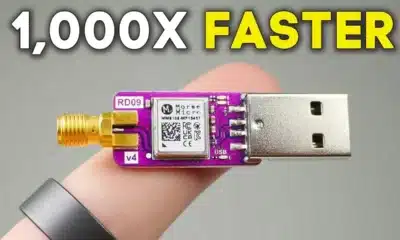
The advancement of technology has continuously broken barriers, making sophisticated tools accessible to the average individual. Ultra-wideband (UWB) technology, once exclusive to specialized labs and industries, is now completely within reach for makers and hobbyists. With modules like the AI ub3, DIY builders can tap into features that offer centimeter-level precision in robotics and automation—transforming creative visions into actionable projects.
Why UWB Technology is a Game Changer
UWB stands out due to its remarkable precision, achieved through a time-of-flight measurement technique. This process calculates the duration taken by radio waves to travel between devices, thereby enabling highly accurate positioning. Unlike traditional wireless systems, UWB technology is resistant to interference and can navigate minor physical obstacles, making it ideal for real-world applications. After proper calibration, it can offer accuracy levels within 10 centimeters, ensuring reliable tracking and positioning.
Additionally, UWB excels in cluttered environments where technologies like Bluetooth and Wi-Fi often falter. Its low power consumption makes it equally appealing for battery-operated devices. Thus, UWB is not only a practical solution but also an efficient one for precision-driven projects.
Key Features of UWB Modules
The introduction of modules like the AI ub3 marks a significant step in democratizing UWB technology. This module integrates several essential features:
– Three-axis accelerometer: Captures data regarding motion and orientation for dynamic tracking.
– Multi-device networking: Supports a network of up to nine devices—one tag and eight base stations—facilitating multipoint tracking.
– Real-time distance measurement: Outputs continuous updates that are ideal for a myriad of applications.
These compact modules can seamlessly integrate with popular microcontrollers, such as Raspberry Pi Pico and Arduino, making them perfect for both novices and experienced creators. Their affordability and user-friendly design encourage a wider audience to explore the advantages of UWB technology.
Getting Started with UWB Modules
For those eager to dive into using UWB modules, proper setup is crucial. Configuration is handled through AT commands via UART communication, allowing you to assign unique IDs to your tags and base stations for synchronization. This ensures accurate distance measurements and dependable readings.
Once set up, programming your UWB device can be accomplished with languages like MicroPython and C++. These choices cater to different skill levels, enabling quick experimentation or in-depth development. Calibration is also integral to achieving reliable performances, compensating for consistent measurement offsets and ensuring accuracy within the operational range.
Real-World Applications of UWB Technology
The versatility of UWB technology paves the way for a myriad of practical applications across various sectors:
– Robotics: Implement automated navigation for domestic robots, enabling them to function within defined borders like those of a lawn or room.
– Automation: Create systems that respond to proximity, such as doors that open or lights that activate as a user approaches.
– 3D spatial tracking: Facilitate the tracking of objects in three-dimensional spaces, making it valuable for industries like gaming and industrial automation.
– Asset management: Efficiently monitor valuable items in large environments, enhancing inventory management processes.
– Fitness and sports: Utilize UWB technology for precise tracking of movements, providing invaluable data for athletic training or fitness activities.
Challenges and Future Directions
Despite its many advantages, UWB technology presents certain challenges. Calibration is key for accuracy, and the technology may be influenced by various environmental factors, such as physical barriers or signal interference. However, with thoughtful planning and execution, makers can work around these limitations.
Looking to the future, the opportunities for UWB technology are vast, particularly with the potential for multi-tag tracking and sophisticated custom configurations. Integrating UWB with machine learning could lead to innovative applications, honing further into areas such as predictive analytics and sophisticated autonomous systems.
Empower Your Innovative Projects
Ultra-wideband technology has undoubtedly transitioned from the realm of elite industries to the hands of DIY enthusiasts. Affordable products like the AI ub3 simplify the integration of UWB into numerous applications—be it robotics, automation, or innovative spatial tracking. By mastering UWB setup, calibration, and programming, creators can significantly increase the precision and functionality of their projects.
As this technology evolves, makers are encouraged to explore its full potential by experimenting with advanced setups and merging UWB with other cutting-edge technologies like the Internet of Things (IoT) or artificial intelligence (AI). Such integrations can lead to groundbreaking solutions for real-world challenges, inviting you to transform your ideas into remarkable implementations.