






Gaming
Bare-Metal Programming Made Easy: Your Step-by-Step Guide to Low-Level Development Success

Picture a world where you can break free from the confines of conventional operating systems and engage directly with your computer’s hardware. This fascinating domain is known as bare-metal programming, a practice where developers leverage assembly language for direct communication with a device’s fundamental components. The significant benefit here is the ability to maximize system performance and gain complete control over resources, but it requires overcoming a steep learning curve. For those willing to navigate this complex territory, the rewards are substantial, ranging from the creation of highly optimized applications to a deep understanding of low-level hardware interactions.
This article explores both the considerable challenges and thrilling opportunities that arise from programming in assembly without the aid of an operating system. By utilizing tools like the Unified Extensible Firmware Interface (UEFI), developers can interact directly with hardware components. Techniques such as graphics rendering through the Graphics Output Protocol and user input management via the Simple Pointer Protocol pave the way for incredible performance enhancements. Whether your aim is to design an arcade-style game or to delve into the intricacies of modern hardware, this journey can significantly expand your expertise in low-level development and ignite your creative potential.
Bare-Metal Programming Overview
Why Opt for Bare-Metal Programming?
While operating systems simplify software development by abstracting the complexities of hardware, this very abstraction can lead to inefficiencies. Although OS environments improve usability, they often introduce overhead and limit a developer’s control over hardware. Here are some compelling reasons to consider bare-metal programming:
- Enhanced performance by eliminating unnecessary architectural layers that separate your application from the hardware.
- Direct control over system resources, allowing precise customization to meet specific application needs.
This approach is particularly advantageous for applications that demand significant processing power or require unconventional hardware interactions. However, it necessitates a strong mastery of assembly language and hardware architecture, making it a challenging but ultimately rewarding path for seasoned developers.
Understanding UEFI’s Significance
The Unified Extensible Firmware Interface (UEFI) serves as the modern alternative to traditional BIOS, acting as a standardized bridge between firmware and operating systems. It provides a comprehensive suite of services that facilitate hardware initialization and resource management. Key features include:
- Boot and runtime services essential for initializing hardware and managing system resources efficiently.
- Advanced memory management capabilities that improve the allocation and utilization of system memory.
By utilizing UEFI protocols such as the Graphics Output Protocol (GOP) and Simple Pointer Protocol, developers can engage directly with the hardware. This allows for the creation of applications that function independently of operating systems, unlocking new levels of performance.
Programming in Assembly without an Operating System
Crafting Assembly Code with UEFI
Developing assembly code for UEFI applications requires structuring your program into distinct sections, such as `.DATA` for data storage and `.CODE` for executable instructions. UEFI’s system tables and protocols are invaluable resources for hardware interaction, enabling tasks like buffer allocation and direct system resource access. This methodology enhances efficiency and offers extensive performance optimization for focused tasks, though it demands meticulous attention to detail, as even small errors can result in instability.
Graphics Rendering via the Graphics Output Protocol
The Graphics Output Protocol (GOP) is essential for video rendering in bare-metal applications. For example, during the development of an arcade-style game project, GOP helped facilitate the scaling and rendering of a 256×256 game screen to higher resolutions. Additionally, using multi-threading through UEFI’s MP Services Protocol allowed for effective utilization of multiple CPU cores, ensuring smooth graphics performance and high frame rates, both of which are critical for engaging gaming experiences.
Handling Input with the Simple Pointer Protocol
Managing user input in a bare-metal setup presents distinct challenges. Initial attempts at keyboard input proved less effective in an arcade gaming context. A shift to mouse-driven joystick controls via the Simple Pointer Protocol greatly enhanced responsiveness, highlighting the necessity of adapting input methods to suit application demands.
Constructing a Tile-Based Graphics Engine
Hardware Configuration and Testing
Testing UEFI applications on physical hardware requires careful configuration of boot settings and the use of a GUID Partition Table (GPT). The hardware setup for these efforts often includes:
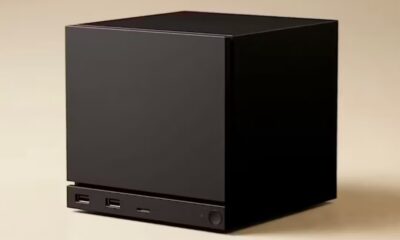
- A GEEKOM A9 MAX mini PC equipped with an AMD Ryzen 9 HX370 CPU.
- 32GB of DDR5 RAM and a 2TB SSD to fulfill storage and memory requirements.
This configuration provides the essential resources to meet the demands of game development projects. Conducting tests on actual hardware ensures compatibility and paves the way for performance optimizations.
Challenges and Considerations
Despite the numerous advantages of bare-metal programming using UEFI, there are considerable challenges:
- Limited access to high-resolution timers, as UEFI doesn’t provide precise timing support, necessitating creative solutions to achieve accurate frame rates.
- Input handling limitations, since UEFI’s protocols are not specifically designed for gaming, complicating the creation of responsive controls.
- A steep learning curve that requires a deep understanding of hardware architectures and meticulous attention to detail, which can be intimidating for many developers.
These challenges underscore the trade-offs involved when operating at lower abstraction levels. While there are vast opportunities for optimization, the complexities associated with development can significantly increase.
Discovering the Potential of Bare-Metal Programming
Building an arcade-style game that runs directly on hardware without relying on an operating system showcases the potential inherent in bare-metal programming. By mastering UEFI and assembly language, developers can unlock remarkable performance levels and precision, pushing the boundaries of modern computing capabilities. Although this journey is filled with challenges, those who dedicate their time and effort can gain profound insights into the intricacies of hardware and the art of low-level programming.