





Reviews
Unleashing Durability: An In-Depth Look at the RugOne Xever 7 Pro Smartphone

RugOne Xever 7 Pro: 30-second review
RugOne operates under the same parent company as Ulefone, focusing on higher-end designs that appeal to businesses seeking alternatives to lower-cost retail choices.
This innovation utilizes hot-swappable batteries—a technique often seen in tablet devices but rarely implemented in modern smartphones.
What’s particularly clever about this design is the single 5550 mAh battery, which can be quickly replaced, theoretically allowing for continuous operation without downtime.
Despite the single battery’s limitations, the phone remains practical for everyday use in terms of size and weight.
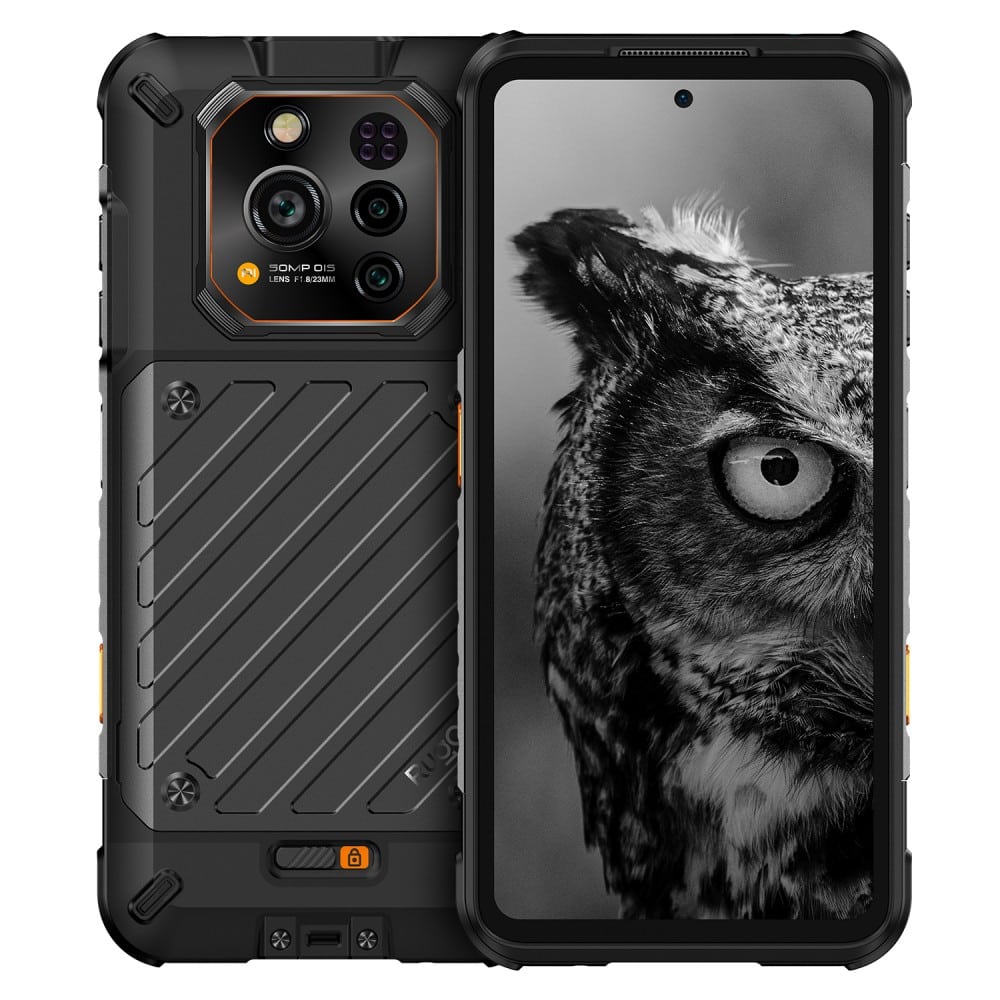
Besides the easily swappable battery, the RugOne Xever 7 Pro comes equipped with a FLIR thermal camera—an invaluable tool for professionals dealing with HVAC, electrical work, or automotive repairs.
However, two significant drawbacks exist: the SoC and GPU combination don’t stand up to the offerings from many premium smartphones today. Additionally, its relatively high price tag may deter potential buyers.
Given its pricing structure, the RugOne Xever 7 Pro is unlikely to feature in our list of top rugged phones. There are more affordable devices available that still include thermal imaging, while the Samsung Galaxy XCover7 Pro already offers the removable battery feature.
RugOne Xever 7 Pro: price and availability
- Price: $723.99/£685.79/€761.99
- Availability: Currently available
- Where to buy: Available directly from RugOne as well as various online platforms like AliExpress.
The pricing for this device can be perplexing, so exercise caution when making a purchase.
The RugOne website lists one price of $659.99 for US customers or €699.99 for European buyers.
Upon proceeding with the purchase, two global purchasing options appear: AliExpress and store.rugone.net followed by regional links for Ukraine, Romania, and Guatemala.
A customary selection from AliExpress would generally yield better prices. However, in this instance, that assumption is incorrect.
As of writing, prices from AliExpress are listed at $723.99/£685.79/€761.99, significantly above the stated prices on the RugOne website. The store.rugone.net option currently quotes £509.99 for the UK (including free shipping), $659.99 for the US, and €699.99 for the EU.
With current exchange rates noting $1.35 to 1 pound, the UK price should approximate £488. In the EU, with an exchange rate of 1.18, the expected charge should be around €559.
This highlights that both UK and EU buyers may be paying excessive amounts, with the UK reflecting a 4% increase and EU customers facing an exorbitant 25% markup compared to US consumers.
The rationale behind this pricing discrepancy remains unclear, though RugOne maintains the right to set its prices.
That said, alternatives with better specifications are available for less money. An equivalent structure without thermal imaging, swappable batteries, or an OLED display is the Oukitel WP60, typically priced around $280.
For thermal capabilities, the AMD G3 Pro remains a cheaper alternative compared to the RugOne Xever 7 Pro, securing a position as a premium choice.
Additionally, a competitor highlighted by RugOne is the Samsung Galaxy XCover7 Pro, which may lack the memory and storage offered by the RugOne Xever 7 Pro but comes in at roughly half the price.
Clearly, rising component costs are affecting these prices, especially in Europe, but given the SoC used in the RugOne Xever 7 Pro, the pricing seems excessively high.
RugOne Xever 7 Pro: Specs
RugOne Xever 7 Pro Specifications
| Item | Spec |
| CPU: | MediaTek Dimensity 7025 |
| GPU: | IMG BXM-8-256 GPU |
| NPU: | MediaTek NPU 550 |
| RAM: | 12GB |
| Storage: | 512GB |
| Screen: | 6.67-inch OLED Screen |
| Resolution: | 1080 x 2400 FHD+, 120Hz, 2200 nits |
| SIM: | 2x Nano SIM + TF + eSIM (all can be used) |
| Weight: | 325 grams |
| Dimensions: | 173.6 x 84.4 x 14.1 mm |
| Rugged Spec: | IP68 IP69K dust/water resistant (up to 2m for 30 minutes), MIL-STD-810H Certification |
| Rear cameras: | 50MP AI Main Camera + 64 MP Night Vision Camera + FLIR Lepton 3.5 sensor (160 x 120 resolution) |
| Front camera: | 32MP Samsung |
| Networking: | WiFi 6, Bluetooth 5.2 |
| Audio: | 3.5mm audio jack for headphones |
| OS: | Android 15 (updates promised) |
| Battery: | 5550 mAh (Max 33W wired, dock included), hot-swappable |
| Colours: | Black |
RugOne Xever 7 Pro: design
- Industrial aesthetic
- Additional custom button
- Swappable batteries made easy
There exists a point at which a smartphone exceeds dimensions that make it unwieldy. The RugOne Xever 7 Pro approaches that limit without overshooting it.
The phone’s dimensions are informed by the 6.67-inch OLED display, which features a narrowly designed border on most sides, with a length of 173.6mm and a width of 84.4mm.
At just over 14mm thick, this model exhibits a sleek and stylish design, only slightly heavier than typical smartphones, weighing in at 325 grams.
The industrial design—characterized by serrated slots machined into the alloy frame and back surface—provides a unique look. This aesthetic may not appeal to all, but users can be assured their grip won’t falter, even with moist hands.
The button layout is largely familiar, featuring a power button/fingerprint reader and volume controls on the right, with the SIM tray and customizable button on the left. RugOne has added another customizable button on the right for convenient photo capture.
Along the top edge, users will find a small camping light, plus a 3.5mm audio jack—a feature many appreciate, eliminating the need for charging headphones.
Another standout characteristic of this phone is the swappable battery, concealed beneath a panel on the rear that can be released via a locking mechanism.
Included with the phone is a well-designed charging dock, which the device fits into effortlessly. This dock serves to charge and store the second battery.
A capacitor within the phone allows users to swap the battery without shutting down the phone for up to 180 seconds, although remaining focused is essential during the swap. This feature essentially doubles the operating life from 5550 mAh to 11100 mAh, with potential for RugOne to provide additional batteries for extended usage.
Such a feature enables the device to function similarly to heavier alternatives without the inconvenience of carrying additional mass at all times.
From a design standpoint, the RugOne Xever 7 Pro is an impressive endeavor that successfully incorporates its critical elements—most notably the swappable battery—into a practical and thoughtfully executed package.
Design score: 4/5
RugOne Xever 7 Pro: hardware
- MediaTek Dimensity 7025
- Disappointing GPU
- Adequate RAM and storage
- Flexible battery features
Referring back to previous notes, I’ve assessed another device running the MediaTek Dimensity 7025, specifically the Oukitel WP60. In that review, I remarked that the Dimensity 7025 is a variant of the 7020, effectively a rebranded Dimensity 930 from when MediaTek adhered to a 6nm process, whereas today, they utilize a 4nm method.
I received no complaints from Oukitel, lending credibility to my assertion that this chip is circa-2022 technology. It’s unusual to find this in a 2025 model.
Going further, I don’t attribute the performance issues to the CPU, which is adept; it’s the IMG BXM-8-256 GPU within the SoC that feels antiquated.
I will delve deeper into GPU concerns in the performance evaluation; however, the PowerVR IMG designs fall short compared to current AMR Mali or other mobile GPU alternatives. Notably, the SoC features an NPU, with the MediaTek NPU 550, though it’s unclear how much this contributes to the phone’s AI capabilities or if that’s primarily managed via the Cloud.
Notably, the phone boasts sufficient memory, featuring 12GB of RAM and 512GB of storage. I appreciate that RugOne avoided the common temptation to inflate RAM capacity, thereby presenting a realistic 12GB without marketing it as 32GB by incorporating storage.
Unless you’re juggling a multitude of Android applications, 12GB is generally sufficient, and the 512GB primary storage can be expanded with a MicroSD card, allowing for an additional 2TB of space.
As previously mentioned, the swappable battery is a highlight, and RugOne aims to release custom covers for it. Fast charging capabilities at 33W enable the battery to reach full charge within an hour. There’s also the option to reverse-charge other devices if needed. These batteries are rated for a lifecycle of 1000 recharges, offering a minimum of six years of operational lifespan if no additional purchases are made.
My main concern regarding the batteries is the connection between the phone and the charging dock, which relies on pogo pins. While these can be fragile, users can still charge the phone directly via USB and recharge the batteries via the dock.
In my opinion, a superior SoC would have rendered the device more competitive—it definitely needed at least the Dimensity 7300 for better efficiency.
RugOne Xever 7 Pro: cameras
- 50MP, 64MP, and Thermal sensors on the rear
- 32MP on the front
- Four cameras overall
The RugOne Xever 7 Pro features four cameras:
Rear camera: 50MP Samsung GN9 primary sensor, 64 MP Omnivision OV64B Night sensor, Thermal by FLIR Lepton 3.5. Front camera: 32MP Samsung GC32E1.
This configuration mirrors that of the WP200 Pro, where the main sensor is the 108MP Samsung S5KHM6SX. This 1/1.67-inch format, 108 MP stacked imager presents a 0.64 µm pixel pitch, ISOCELL 2.0 technology, and Nonacell Bayer RGB color filters from Samsung’s catalog.
With an impressive 108 megapixels, this sensor can produce remarkably detailed images or effectively utilize pixel binning for vibrant colors and HDR contrast. Results, especially outdoors, can be stunning; yet, there are instances where the focus system seems to target the incorrect object.
However, the absence of optical zoom is a downside; digital zoom transitions may be abrupt. Additionally, the rear camera lacks wide or telephoto sensors, relying on a somewhat mediocre 2 MP macro sensor and a 0.3 MP sensor for depth effects.
This places the burden of capturing high-quality images primarily on the main sensor. On a brighter note, Oukitel has incorporated an extensive camera application that features a fully functional PRO mode for manual controls, alongside options for timelapse, slow-motion, night views, and panoramic shots.
A feature I would advise against using is the underwater mode accessible via the customizable button. Although the phone is rated for full submersion for limited periods, the maximum depth of 1.5M can be challenging to manage in oceans or swimming pools.
Under optimal conditions, photos taken are decent yet might not distinguish themselves as exceptional. Given the device’s price point, the main sensor is a sensible choice, outperforming a number of other phones with 50MP sensors.
For selfies, 32 MP may appear excessive, especially as it records at only 1080p. This raises questions regarding the necessity of such high resolution for 1080p video. Nonetheless, this sensor does capture good-quality images for those who enjoy digital self-portraits.
It’s important to note that the phone lacks Widevine L1 video decryption, offering only L3. This means that when streaming from major services like Netflix or Disney+, users will only achieve 480p resolution, even with a seamless 5G connection.
In summary, while the cameras perform beyond initial expectations, they fall short in optical focus and stabilization that many premium devices now provide.
RugOne Xever 7 Pro: performance
- Older SoC technology
- GPU concerns with OpenGL and Vulkan
- Battery situation
| Phone | Header Cell – Column 1 | RugOne Xever 7 Pro | AGM G3 Pro |
|---|---|---|---|
| SoC | Row 0 – Cell 1 | MediaTek Dimensity 7025 | Mediatek Dimensity 7300 |
| GPU | Row 1 – Cell 1 | IMG BXM-8-256 | Mali-G615 MC3 |
| NPU | Row 2 – Cell 1 | MediaTek NPU 550 | MediaTek NPU 656 |
| Memory | Row 3 – Cell 1 | 12GB/512GB | 12GB/512GB |
| Weight | Row 4 – Cell 1 | 325g | 375g |
| Battery | Row 5 – Cell 1 | 5550 | 10000 |
| Geekbench | Single | 940 | 1026 |
| Row 7 – Cell 0 | Multi | 2283 | 3003 |
| Row 8 – Cell 0 | OpenCL | 136 (Fail) | 2560 |
| Row 9 – Cell 0 | Vulkan | 133 (Fail) | 2509 |
| GFX | Aztec Open Normal | 19 | 38 |
| Row 11 – Cell 0 | Aztec Vulkan Norm. | 18 | 40 |
| Row 12 – Cell 0 | Car Chase | 16 | 33 |
| Row 13 – Cell 0 | Manhattan 3.1 | 33 | 57 |
| PCMark | 3.0 Score | 11353 | 16286 |
| Battery | 17h 53m | 34h 4m | |
| Charge 30 | % | 33 | 25 |
| Passmark | Score | 10999 | 13665 |
| Row 18 – Cell 0 | CPU | 5367 | 6927 |
| 3DMark | Slingshot OGL | 3777 | 6612 |
| Row 20 – Cell 0 | Slingshot Ex. OGL | 2600 | 5123 |
| Row 21 – Cell 0 | Slingshot Ex. Vulkan | 2665 | 4822 |
| Row 22 – Cell 0 | Wildlife | N/A | 3123 |
| Row 23 – Cell 0 | Nomad Lite | N/A | 347 |
As previously mentioned, the chosen SoC seems mismatched for this phone. Testing against the AGM G3 Pro reveals notable differences between the Dimensity 7025 and 7300.
While the CPU variations appear slight initially, performance proves otherwise in graphics-intensive tasks, where the IMG BXM-8-256 lags significantly behind the Mali-G615 MC3 GPU.
Slower performance aside, the IMG BXM-8-256 struggles with its Vulkan and OpenGL implementations, resulting in failing to meet standards in GeekBench and not being able to run Wildlife or Nomad Lite from the 3DMark test suite.
If gaming or AR/VR applications are part of your routine, these graphics limitations may pose a challenge.
Another interesting aspect revealed through these evaluations involves battery life—what initially seems advantageous may not hold true.
With a single battery, the claimed 17 hours and 53 minutes of usage is adequate for most users’ daily needs. However, integrating the secondary battery potentially extends that to 35 hours and 46 minutes—just over an hour more than the AGM G3 Pro and its 10,000 mAh battery. Yet the expectation would be for the 11,100 mAh capacity in the RugOne to yield greater longevity, though it barely exceeds the AGM G3 Pro by less than 5%. Interestingly, the G3 Pro is only 50 grams heavier due to the larger battery.
It appears that the construction needed for the swappable battery has counteracted the anticipated weight benefits. Additionally, the newly designed Dimensity 7300 offers better power efficiency, providing the AGM G3 Pro with superior battery life per mAh.
While the RugOne Xever 7 Pro allows for virtually limitless battery life with spare batteries, had it employed a more efficient SoC, those replacements would likely be less frequent.
Battery life is commendable, although it necessitates carrying the spare battery—including its dock, which complicates portability compared to competing devices with nearly double the built-in capacity.
RugOne Xever 7 Pro: Final verdict
Upon assessment, concerns emerge about the initial decisions behind the RugOne Xever 7 Pro, particularly the decision to incorporate a 5550mAh battery, which proves insufficient for the SoC required.
This speculation suggests the design initially targeted compatibility with a Snapdragon 7 or Dimensity 8200 SoC that would have higher power consumption. However, the Dimensity 7025 was used instead, bringing with it an underwhelming IMG BXM-8-256 GPU.
When placing the SoC alongside the overall build quality, OLED display, FLIR Lepton 3.5 thermal imaging functionality, and other camera sensors, it creates an odd disconnect where the SoC feels inferior.
Admittedly, a less demanding SoC might extend battery life but falls short for more intensive users who require robust graphical capabilities.
A Snapdragon 7c or a similarly powerful SoC would enable justifying the asking price. Without this, the RugOne Xever 7 Pro appears distinctly overpriced despite otherwise commendable specifications.
Should I buy a RugOne Xever 7 Pro?
RugOne Xever 7 Pro Score Card
| Attributes | Notes | Rating |
|---|---|---|
| Value | Price seems high, even with an OLED screen, removable batteries, and a thermal camera. | 2.5/5 |
| Design | Effective design that promotes ease of use | 4/5 |
| Hardware | Outdated SoC technology with inadequate GPU but commendable swappable batteries. | 3/5 |
| Camera | Modern Samsung sensors with FLIR features, although no 4K video or optical zoom. | 3/5 |
| Performance | Inadequate GPU and a SoC that’s not as power proficient as expected. | 3.5/5 |
| Overall | Mismatched components detract from a potentially outstanding phone. | 3.5/5 |